At some point every high-hour CAT engine reaches the question. Blow-by is up, oil consumption is climbing, power is down, and someone has to decide whether to open it up or swap it out.
The answer depends less on the engine than on what you plan to do with the machine afterwards.
Confirm what is actually wrong first
Plenty of engines get rebuilt when the real problem was somewhere else. Low power can be a turbocharger, an injector, a fuel supply restriction or an air filter nobody has checked in a year. Oil consumption can be a leaking seal rather than worn rings.
Before committing to anything, run the basic diagnostics:
- Compression test across all cylinders, looking for variation more than absolute figures
- Blow-by measurement, compared against the engine’s specification
- Oil analysis, which identifies which metals are wearing and narrows down where
- Fuel system check, including injectors and fuel pump supply pressure
- Turbo inspection for shaft play and oil in the intake
Oil analysis is particularly worth doing. It is inexpensive and it distinguishes bearing wear from cylinder wear, which is the difference between an in-frame rebuild and a full overhaul.
In-frame versus out-of-frame
In-frame rebuild
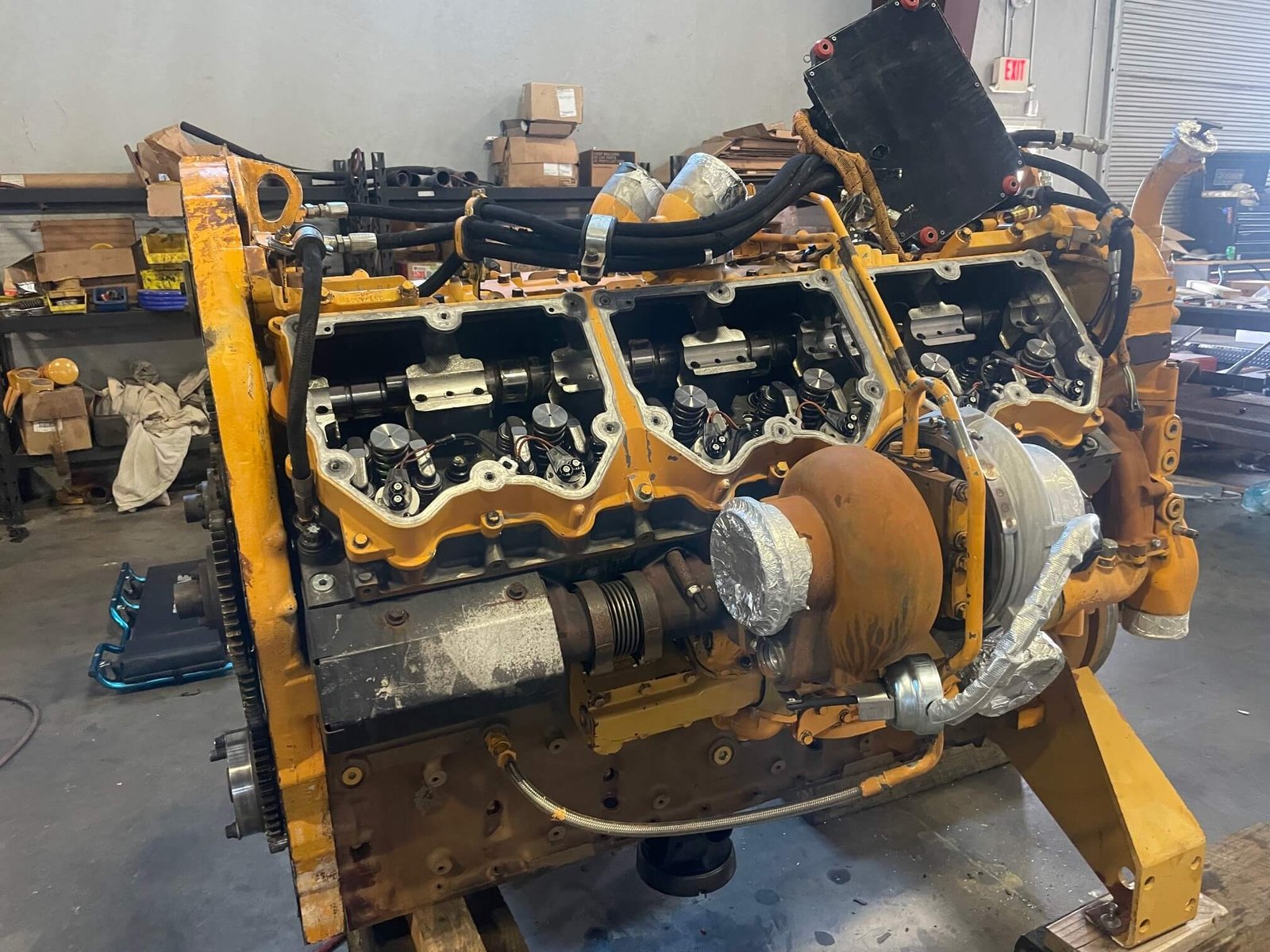
The engine stays in the machine. Liners, pistons, rings, rod bearings and seals get replaced, and the cylinder head is serviced or exchanged. Less labour, less downtime, lower cost.
It works when the block, crankshaft and main bearings are still within spec. If the crank is scored or the block is damaged, an in-frame will not fix it and you will be doing the job twice.
Out-of-frame overhaul
The engine comes out. Everything above plus crankshaft regrind or replacement, connecting rods checked or replaced, main bearings, block inspection and machining as needed. More labour, more downtime, considerably more cost.
Necessary when the bottom end is worn or damaged, and worth considering on very high-hour engines where you want maximum life out of the rebuild.
The economics, honestly
A sensible way to frame the decision:
- How many hours do you expect to get from the rebuild, realistically?
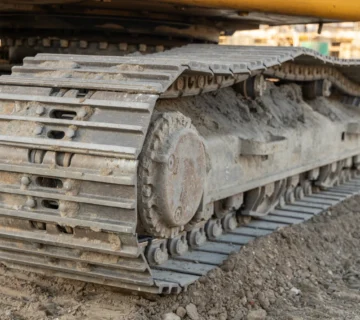
- How much machine life remains outside the engine — undercarriage, hydraulics, structure?
- What would a comparable used machine cost?
- What does the downtime cost you in lost work?
Rebuilding a sound machine with a tired engine usually makes sense. Rebuilding an engine in a machine whose undercarriage is finished and whose hydraulics are leaking usually does not — you will spend the rebuild cost and still own a machine that needs more work.
Where it gets genuinely difficult is the middle case: a machine that is worn but not finished. There is no formula for that one. It comes down to how long you need the machine and what else you would spend the money on.
Parts quality matters more here than anywhere else
A rebuild is mostly labour. If the parts fail early, you pay that labour again, and the second time you also pay for whatever the failed part damaged on its way out.
For core components — pistons, liners, bearings, crankshafts and connecting rods — this is where genuine or properly specified parts earn their price. Saving a modest amount on a bearing set and losing a crankshaft to it is a bad trade, and it is a trade people make regularly.
Peripheral items are more flexible. Gaskets and seal kits, hoses and belts from a quality aftermarket source are generally fine and meaningfully cheaper. The full engine parts range covers both ends of that spectrum.
Remanufactured as a middle option
A reman engine sits between rebuild and new. It is an engine that has been fully overhauled to specification, usually with a warranty, and it swaps in with far less downtime than an in-situ rebuild.
It costs more than an in-frame and less than new. The main advantage is time: if the machine needs to be earning rather than sitting in a workshop for weeks, that difference can outweigh the extra cost.
Before you commit
- Confirm the diagnosis with oil analysis and a compression test, not symptoms alone
- Get the block and crank inspected before choosing in-frame over out-of-frame
- Price the full parts list, including the valves and guides and oil pump that always turn up once the engine is open
- Assess the rest of the machine honestly
- Confirm parts availability before the engine comes apart, not after
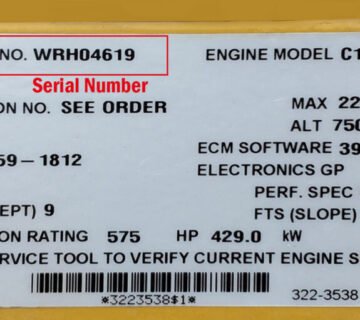
That last one causes more delay than anything else. An engine stripped on a workshop floor waiting six weeks for a crankshaft is a very expensive way to find out your supplier did not have stock. Send us your parts list and serial number before the strip-down and we will confirm what is available and what has a lead time.
If you are working from an old service manual, be aware that part numbers may have been superseded since it was printed. The guide to finding CAT part numbers explains how to check.
Frequently asked questions
What is the difference between an in-frame and a full overhaul?
An in-frame replaces liners, pistons, rings, rod bearings and seals with the engine still in the machine. A full overhaul removes the engine and also addresses the crankshaft, main bearings and block. In-frame is cheaper and faster but only suitable if the bottom end is sound.
How do I know whether my engine needs a rebuild or just repair?
Oil analysis and a compression test will usually tell you. Low power and high consumption often come from turbos, injectors or fuel supply rather than internal wear, so rule those out first.
Is a remanufactured engine as good as a rebuild?
A properly remanufactured engine is built to specification and normally carries a warranty. The main difference is downtime — a reman swaps in quickly, where a rebuild keeps the machine out of service for weeks.
Can I use aftermarket parts in a rebuild?
For peripheral items like gaskets, seals and hoses, quality aftermarket is generally fine. For pistons, liners, bearings and crankshafts, genuine or properly specified parts are worth the difference, because a failure means paying for the labour twice.
How long does a CAT engine rebuild take?
It depends on scope and parts availability. The workshop time is usually predictable; the delays come from waiting on parts. Confirm availability before the engine is stripped.