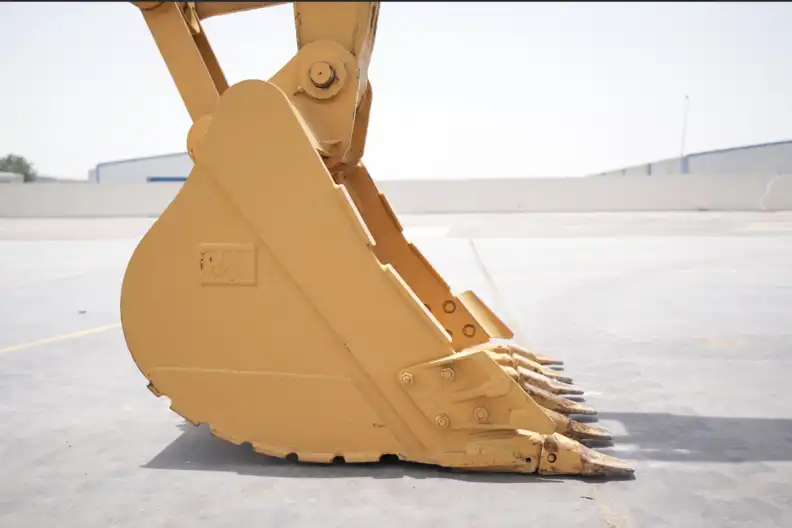
A bucket that is too big will not fill properly, strains the hydraulics and slows every cycle. A bucket that is too small means more passes for the same volume. Both cost money, just in different ways.
Most operators end up with whatever bucket came with the machine and work around it. That is fine until the material changes.
The main bucket types
General purpose (digging) bucket
The default. Suits soil, clay, sand and loose aggregate. Moderate tooth spacing, reasonable capacity, and it handles most of what a general contractor encounters. If your work varies, this is the one to own. Most of the buckets we supply fall into this category.
Heavy duty / rock bucket
Thicker wear plates, reinforced side cutters, heavier tooth adapters. Lower capacity than a general purpose bucket of the same width because the extra steel takes up volume and weight. Worth it in blasted rock, demolition debris and abrasive aggregate, where a standard bucket wears through in months.
Trenching bucket
Narrow, flat-bottomed, built to cut a clean trench at a consistent width. Common widths run from 300mm up to about 900mm. Used for pipework, cabling and drainage.
Ditching / grading bucket
Wide, shallow, usually no teeth. Built for shaping, backfilling and finishing slopes rather than breaking ground. A tilting version lets you cut a slope without repositioning the machine, which saves a lot of time on long runs.
Skeleton bucket
Spaced bars instead of a solid back, so fine material falls through and oversize stays in. Useful for sorting rubble, clearing debris and separating rock from soil.
Sizing a bucket to the machine
Bucket capacity is quoted two ways and people mix them up constantly.
- Struck capacity: volume to the level of the cutting edge, with nothing heaped above it
- Heaped capacity: volume including material piled above the rim, usually at a 1:1 angle
Heaped is the larger number, so it is the one quoted in sales material. When comparing two buckets, make sure you are comparing the same measure.
The limiting factor is rarely the volume. It is weight. Bucket weight plus material weight has to stay within the machine’s lift capacity at full reach, not at the boom’s strongest position. A bucket that handles sand comfortably can overload the same machine when filled with wet clay, because wet clay is roughly twice the density.
Material density changes everything
Rough working densities, which vary with moisture:
- Dry sand: around 1,500 kg per cubic metre
- Wet sand: around 1,900
- Dry clay: around 1,600
- Wet clay: around 2,000 or more
- Broken rock: 1,600 to 2,200 depending on type
If you size a bucket for dry material and then work through a wet season, you are running overloaded without changing anything about the machine. This shows up as slow cycle times, hydraulic heat and premature wear on the hydraulic pump and boom cylinders long before anything actually breaks.
Teeth, adapters and the part people forget
Bucket teeth and tips are consumables. The adapter they mount to is not, and replacing adapters means welding, which means the machine is out of service for a day.
Running teeth past their service limit wears the adapter underneath. At that point you are no longer replacing a part that costs very little — you are into welding work that costs considerably more. Checking teeth weekly and changing them on time is the cheapest maintenance on the whole machine.
Quick couplers
If you switch between buckets regularly, a quick coupler pays for itself fast. Changing a pinned bucket takes two people and a reasonable amount of swearing. A coupler takes one operator a couple of minutes.
The trade-off: a coupler adds reach and weight at the end of the boom, which reduces lift capacity slightly and shifts the machine’s balance. On a machine already running near its limit, factor that in before fitting one.
The bucket is not the only thing wearing
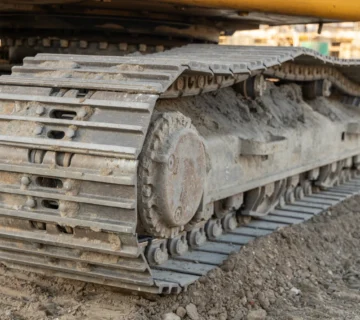
Heavy digging loads the whole front end and the running gear beneath it. If you are working an oversized bucket, check the undercarriage components more often than the service schedule suggests — the extra weight accelerates wear on track chains and rollers alongside everything else. The guide to measuring undercarriage wear covers how to check it properly.
Choosing in practice
If you work mixed material, a general purpose bucket plus a grading bucket covers most situations. Add a rock bucket if you are in aggregate or demolition regularly. Trenching buckets are worth owning only if you trench often enough to justify the storage, and renting otherwise.
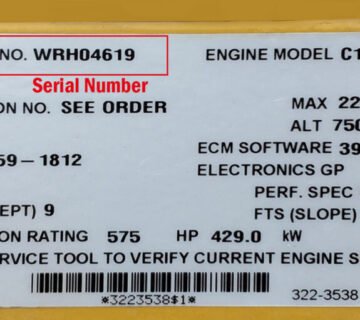
Match the width to the work, size the capacity against the heaviest material you expect to handle rather than the lightest, and check the lift chart at full reach rather than trusting the capacity figure on its own. If you are unsure which bucket suits your machine and material, send us the model and serial number and we will work it out with you.
Frequently asked questions
What size bucket fits a 20-tonne excavator?
Typically 0.8 to 1.2 cubic metres heaped for general purpose work, though the right figure depends on material density and the machine’s lift chart. Heavier material means a smaller bucket on the same machine.
What is the difference between struck and heaped capacity?
Struck measures volume to the cutting edge. Heaped includes material piled above the rim. Heaped is the larger figure and the one usually advertised, so compare like with like.
How often should bucket teeth be replaced?
It depends entirely on material and hours, but inspect weekly. Replace before the tooth wears down to the adapter — once the adapter is damaged, the repair involves welding and much more downtime.
Can I fit any bucket to any excavator?
No. Pin diameter, pin spacing and linkage geometry have to match, and the bucket weight has to sit within the machine’s lift capacity. Check against your machine’s model and serial number.
Is a rock bucket worth it for general work?
Only if you are regularly in abrasive material. A rock bucket carries less volume for the same width because of the extra steel, so in soft ground you are moving less material per pass for no benefit.