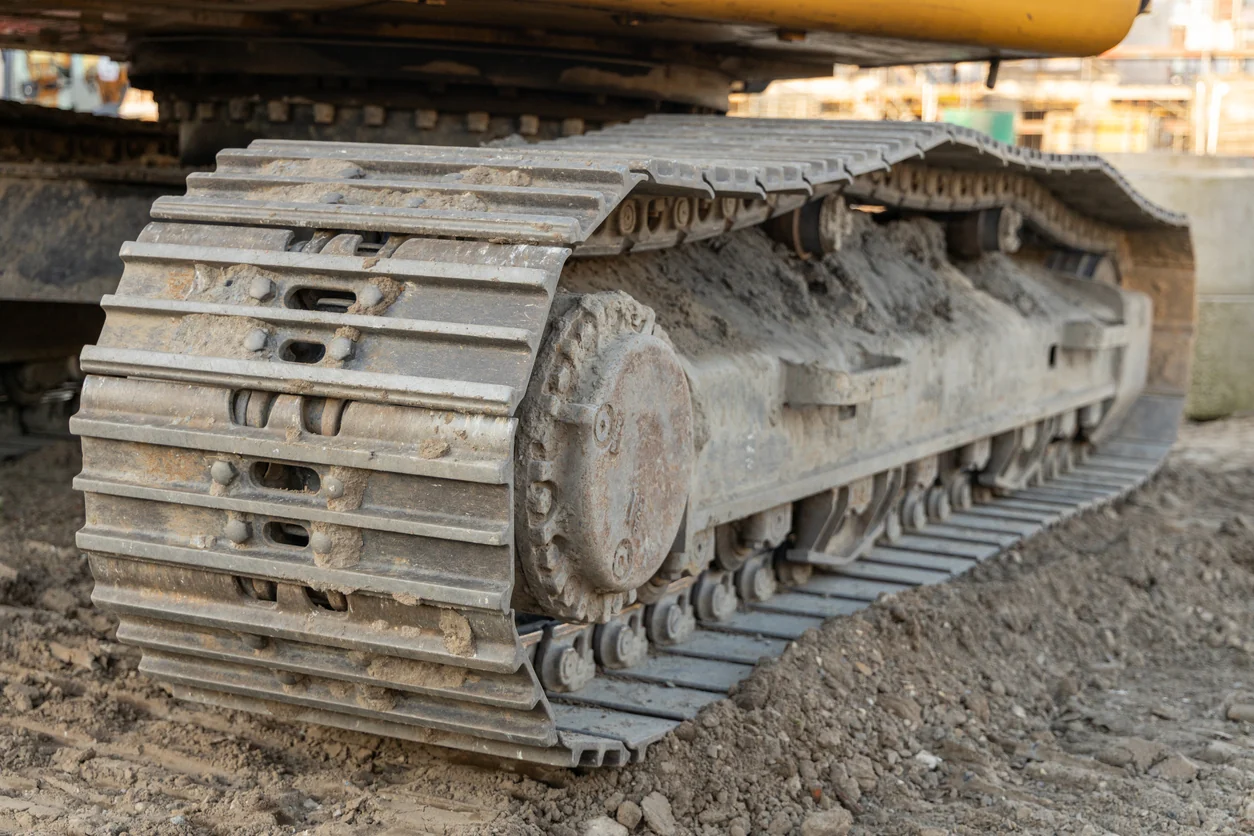
Undercarriage usually accounts for the largest share of a tracked machine’s maintenance spend over its life. It also gets the least attention, because nothing dramatic happens when it wears. It just gets gradually worse until something fails and the machine stops.
The useful thing about undercarriage is that it wears predictably. If you measure it, you can plan replacement instead of reacting to it.
It wears as a system
Track chain, sprockets, idlers and rollers wear together and against each other. A worn sprocket chews through a new chain. A stretched chain destroys a new sprocket. Replacing one component in isolation usually means replacing it again sooner than you expected.
The practical rule: when you replace the chain, inspect the sprocket, and vice versa. If either is past about half its wear life, replace both together. It feels more expensive in the moment and it is cheaper over two years.
Track tension, which causes more wear than anything else
Over-tensioned tracks are the most common cause of accelerated undercarriage wear, and they are entirely avoidable.
A tight track increases load on every pin, bushing, roller and the sprocket, all the time. It also costs fuel, because the machine works harder to turn the tracks. Operators tend to over-tension because a loose track looks wrong and a tight track looks tidy.
Check sag with the machine on level ground. Most machines want a specific sag measurement at the midpoint between the idler and the carrier roller — check your operator manual for the figure, since it varies. In sandy or muddy conditions, run slightly looser than you would on hard ground, because packed material effectively tightens the track.
Measuring wear
Track chain
Measure pitch across several links rather than one, since individual links vary. Wear shows as elongation — the chain stretches as the pins and bushings wear internally. Compare against the manufacturer’s new dimension and the published wear limit.
Bushing wear is usually the component that determines chain life. When bushings wear through, the chain can be turned to run on the unworn side, which is often worth doing and roughly doubles chain life for the cost of labour.
Sprockets
Look at the tooth profile. New sprocket teeth have a symmetrical shape. Worn ones develop a hooked or pointed appearance on the drive side. Once hooking is visible from a few metres away, the sprocket is well past the point where it is damaging the chain.
Idlers and rollers
Measure flange and tread wear against spec. Also check for oil leaks around the seals — a leaking idler is a failed idler, even if it still turns. Once the oil is gone, the bearing runs dry and seizes, and a seized roller flat-spots and then takes the chain with it.
Signs something is wrong before you measure
- Tracks that come off more often than they used to, which usually means a stretched chain or worn idler flanges
- Noise that changes pitch when the machine tracks, often a dry or failing roller
- Uneven wear between left and right, which suggests the machine is being worked in one direction or on a consistent camber
- Oil film on the inside of the track frame, meaning a roller or idler seal has gone
- Visible hooking on sprocket teeth
On wheeled machines the equivalent checks are wheels and tyres, axles and brakes, which wear on a similar logic even though the components are different.
Conditions that shorten life, and what to do about them
Abrasive sand and aggregate wear undercarriage far faster than soil. So does working on hard surfaces, tracking long distances, and operating consistently on a slope.
A few things genuinely help:
- Clean packed material out of the undercarriage at the end of the day, particularly in clay
- Avoid unnecessary tracking on concrete or rock
- Alternate turning direction where the work allows, rather than always turning the same way
- Keep tension correct, and check it more often in muddy conditions
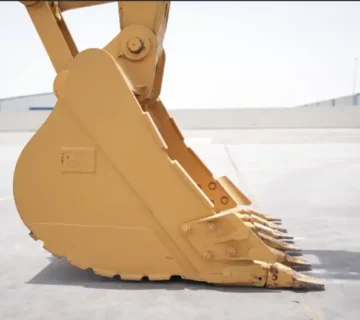
Bucket choice matters here too. An oversized bucket loads the running gear every cycle, which shortens undercarriage life even though nothing about the undercarriage has changed. The guide to bucket sizing covers how to match the bucket to the machine rather than to the job you wish you had.
Planning replacement
Measure at regular intervals and record the figures. Two or three measurements over a few hundred hours gives you a wear rate, and a wear rate lets you predict when a component hits its limit. At that point you can order undercarriage parts ahead of time and plan the machine out of service, rather than discovering the problem when a chain fails on site.
If you are not sure how to read your measurements against the wear limits, send us the figures and your machine serial number and we will tell you what you are looking at.
Frequently asked questions
How long should an excavator undercarriage last?
Highly variable. Operating conditions, tension and how the machine is used matter more than hours alone. Abrasive material and frequent tracking on hard surfaces can halve expected life compared with soft soil work.
Can I replace just the track chain and keep the sprockets?
You can, but a worn sprocket will wear the new chain quickly. If the sprocket is past roughly half its wear life, replacing both together usually works out cheaper over the following two years.
What causes tracks to come off repeatedly?
Usually a stretched chain, worn idler flanges, or tension set too loose. Check all three rather than simply re-tensioning, because re-tensioning a stretched chain only postpones the problem.
Is over-tightening really that bad?
Yes. It is probably the single largest avoidable cause of accelerated undercarriage wear, and it increases fuel consumption at the same time.
Can worn track chain be turned rather than replaced?
Often yes, if the wear is on the bushings rather than the pins. Turning the chain to run on the unworn side can roughly double its life for the cost of labour. A supplier or workshop can tell you whether yours is a candidate.