Engine control modules, sensors, and wiring harnesses are the parts of a CAT machine most likely to get misdiagnosed — and most likely to be sold as “compatible” when they’re actually the wrong calibration for your engine. If your machine is throwing fault codes or losing power intermittently, here’s what to know before you replace anything.
1. ECMs Are Calibrated, Not Universal
A Caterpillar ECM isn’t a generic computer — it’s programmed with parameters specific to an engine family, and sometimes to an individual machine’s configuration. Two C15 engines built a year apart can need different ECM software. Before buying:
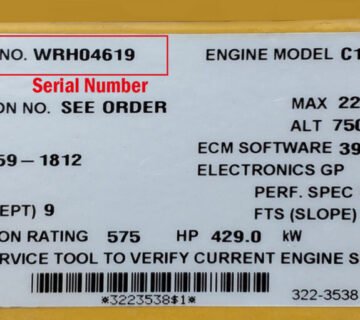
- Confirm the ECM’s part number matches your engine’s serial number, not just the engine model name.
- Ask whether the ECM needs to be flashed/programmed to your machine after installation — many do.
- Avoid any supplier who sells ECMs without asking for your machine’s serial number first. That’s a sign they’re not actually checking compatibility.
2. Sensors Fail Quietly — and Get Misdiagnosed Often
Coolant temperature sensors, oil pressure sensors, and position sensors are cheap compared to an ECM, but a bad sensor reading is one of the most common reasons a good ECM gets blamed and replaced unnecessarily. A supplier who understands CAT fault codes should be able to help you figure out whether you actually need a sensor or whether the ECM is fine and something else is wrong.
3. Counterfeit Electrical Components Are a Real Risk
Electrical components are among the easiest CAT parts to counterfeit convincingly, because the failure isn’t always obvious immediately — a counterfeit sensor might work for weeks before drifting out of calibration or failing outright. Reduce this risk by:
- Buying only from suppliers who can show batch-traceable serial numbers
- Asking whether the component can be verified against Caterpillar’s own reference systems
- Being cautious of unusually low prices on ECMs and controllers specifically — this is where counterfeiting margins are highest
4. Wiring Harnesses: Fitment Matters as Much as Quality
A harness built for the wrong sub-model can have connector pinouts that look identical but aren’t wired the same. Confirm fitment against your machine’s serial number, not just “fits CAT 320D” — model ranges often span multiple electrical configurations.
5. Ask About Diagnostic Support, Not Just Parts
The most useful electrical parts suppliers in Sharjah aren’t just shipping components — they’re helping you confirm which component actually failed before you pay for one. If a supplier can talk through your fault codes with you, that’s a strong signal they know the systems they’re selling.
Where This Fits With Your Other Electrical Needs
If you already know you need a starting motor or alternator rather than an ECM or sensor, see the Caterpillar Alternators page for OEM-spec electrical parts with same-day Sharjah dispatch.
FAQs
Q1: Can I install a Caterpillar ECM myself, or does it need programming?
Many ECM replacements need to be flashed with the correct parameters after installation. Confirm with your supplier whether programming is included or needs to be done separately by a technician.
Q2: How do I know if it’s a sensor problem or an ECM problem?
Start with the fault code. A single, consistent fault pointing to one circuit is often a sensor. Multiple unrelated fault codes or erratic behavior across systems points more toward the ECM itself. A supplier familiar with CAT diagnostics can help narrow this down before you buy anything.
Q3: Are aftermarket sensors reliable for Caterpillar equipment?
Quality aftermarket sensors built to OEM tolerance are generally reliable for non-critical monitoring. For ECMs specifically, genuine or CAT-certified components are strongly recommended given the calibration complexity.
Q4: Can I get same-day ECM or sensor replacement in Sharjah? For components in local stock, yes — same-day dispatch is standard. Confirm stock availability (not just catalog listing) before assuming next-day delivery.